What Is A Turkish Bath? The Rooms And Ritual An Antalya Package Copies
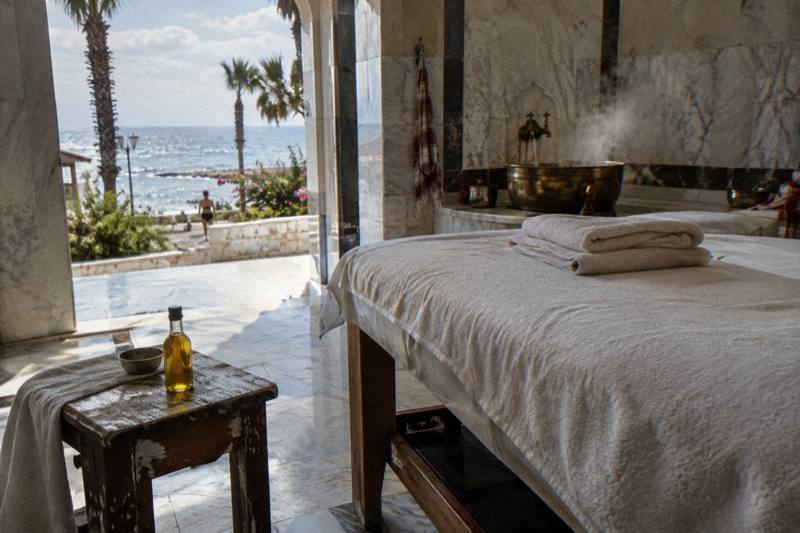
A Turkish bath is a heat-and-water ritual with Roman roots, Ottoman form and a fixed sequence of rooms. Every bookable Antalya package is a compressed copy of that sequence, so understanding the original tells you exactly what you are buying.
Short answer
A Turkish bath, or hammam, is a sequence of warm rooms, steam, a kese scrub, a foam wash on a heated marble slab and usually an oil massage. Antalya packages copy it in 1 to 3 hours, from €14.59 to about €45 per person, or from €99 to €239 for private formats with the basis shown at checkout.
A Turkish bath is not a swimming pool with steam, and it is not a massage with a hot room attached. Turkey's official tourism portal describes the hammam as a blend of Roman and Islamic bath culture that hardened into the Ottoman bathhouse, a building type of which many examples are still working today, and it notes plainly that hammams do not all follow one blueprint (GoTurkey's overview of traditional Turkish hammams). That last point matters for anyone comparing the twenty-odd bookable sessions around Antalya: the venues differ, the durations differ, and yet nearly all of them run the same skeleton of heat, scrub, foam and oil in the same order.
The purpose of this explainer is to give that skeleton a name, room by room and stage by stage, and then to show how a one-hour or three-hour excursion package maps onto it. Once the mapping is clear, the shopping question stops being "which hammam" and becomes "which stages do I want, in how long, with or without a hotel pickup". The comparison pages gathered at Antalya Hammam do that shopping by area; the job here is the underlying ritual.
What Is A Turkish Bath, Exactly?
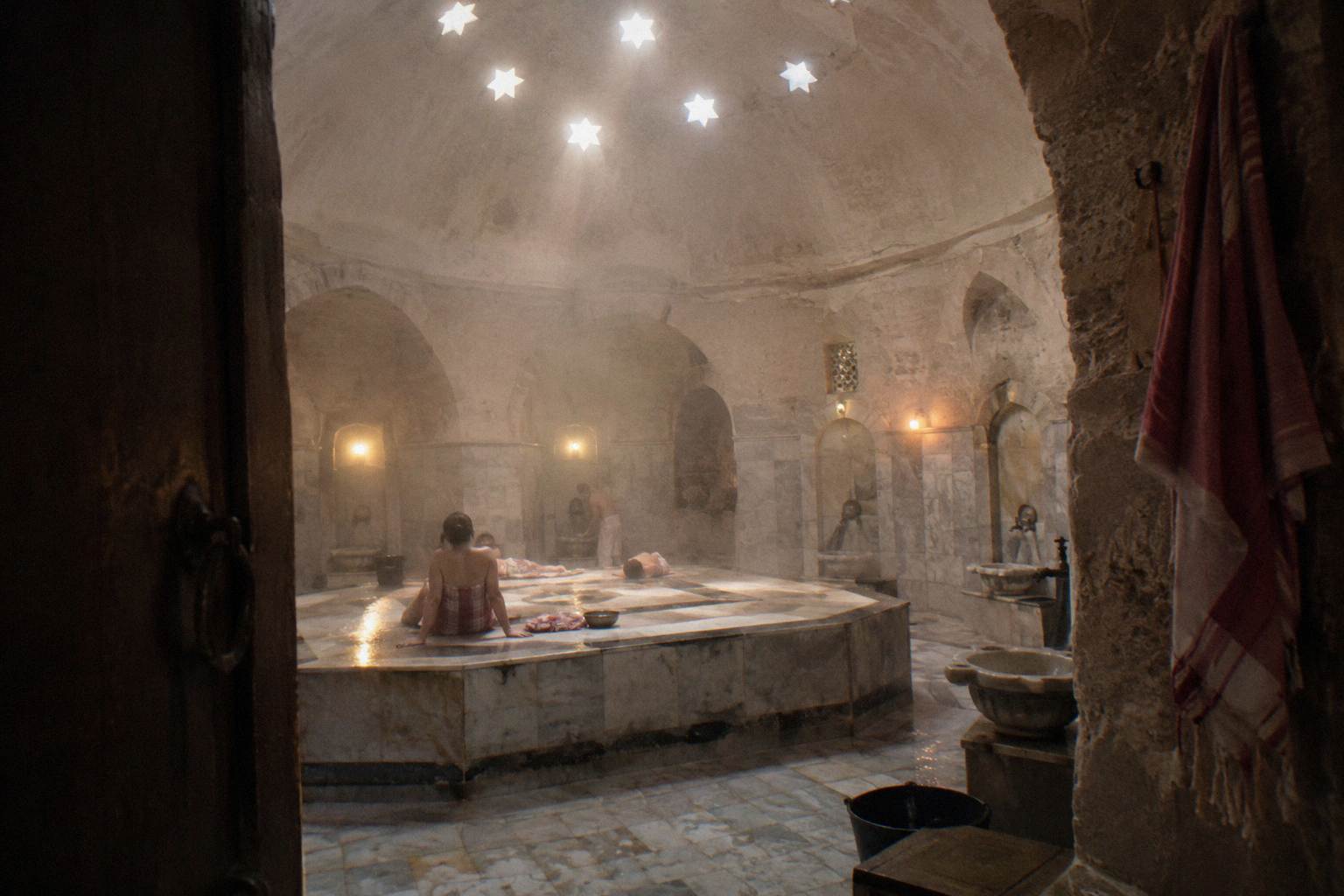
A Turkish bath is a warm-room ritual in a fixed order: you sweat first, then an attendant scrubs you with a kese mitt, then washes you in foam on a heated marble slab, and most visits end with an oil massage. The format descends from Roman bathing, was reshaped into the Ottoman hammam, and survives today both in centuries-old buildings and in modern spa venues. The tourism portal's description of the arrival routine, locker room, wrap and raised seating confirms that the core experience has barely changed even where the building has (the portal's step-by-step of a traditional visit).
The word itself is worth pinning down before anything else. "Hammam" is the Turkish and Arabic word for bath; "hamam" is a common spelling variant you will see on venue signs around Antalya, and "Turkish bath" is the English name for the whole institution. All three point to the same thing, and the difference between the spellings is cosmetic for booking purposes. For the ritual itself, the short version is this: it is a guided, attended washing and heating ceremony, not a self-service spa.
What separates a hammam from a Western spa day is the sequence and the attendance. Nobody wanders between pools at their own pace for an hour. There is a progression, a person guiding it, and a defined end. The traditional equipment is minimal and specific: a thin cotton wrap called a peştemal, a scrubbing mitt called a kese, and often a copper bowl, the tas, for pouring warm water. At the centre of the hot room lies the göbek taşı, the heated marble slab where the scrub and foam wash happen (the official portal's page on the hamam and its items).
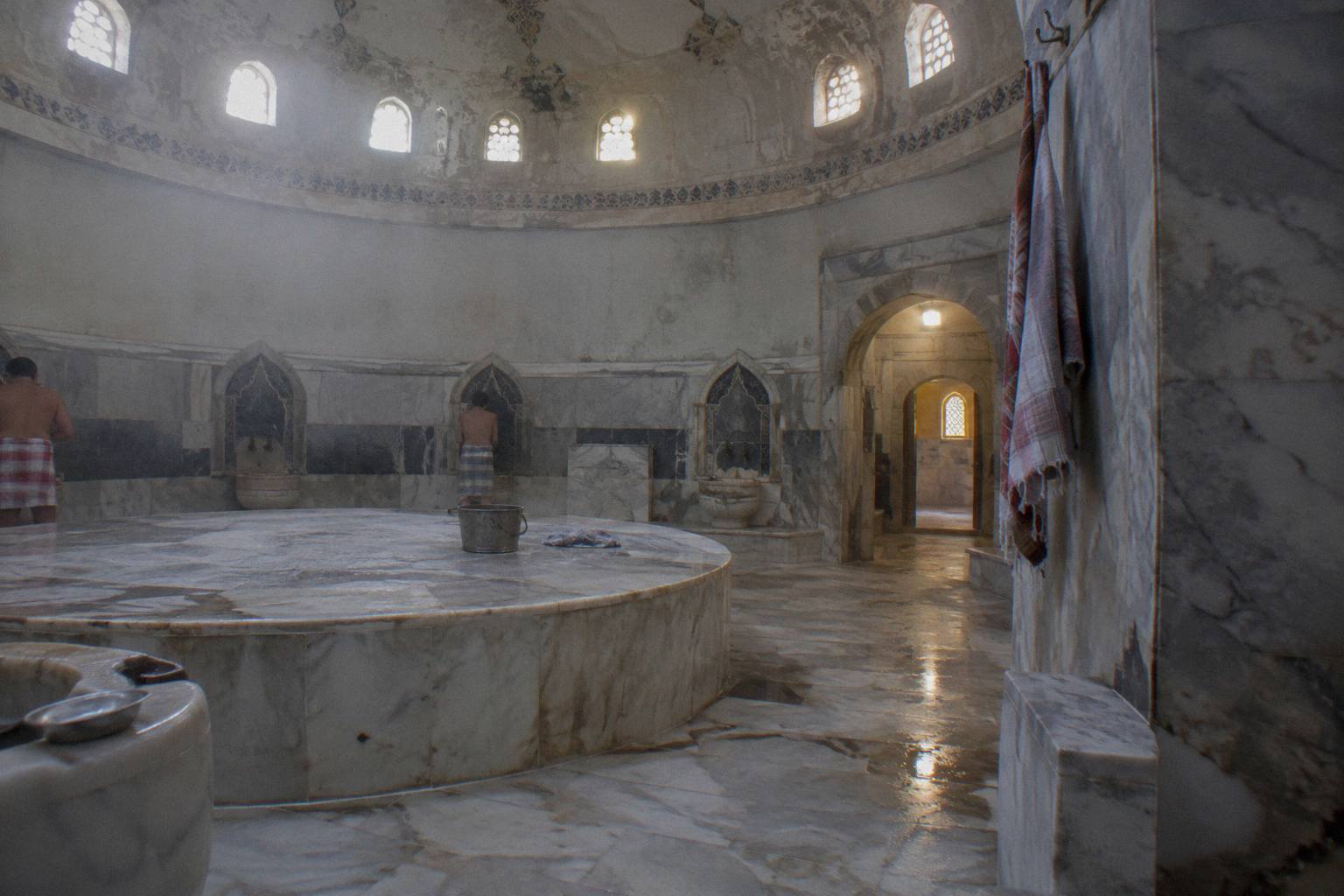
The rooms follow the same logic as the equipment. A classical Ottoman hammam moves you from a cool changing room into a warm intermediate space and then into the hot room, with private side rooms off the hot room in larger buildings. The surviving Seljuk and Ottoman baths of Kaleiçi, discussed further down, still show this plan in stone: a cold room, warm and hot rooms, steam, and the furnace chamber that heated the floor from below. You do not need to memorise the architecture to enjoy the modern version, but knowing it explains why a package lists "sauna" and "steam room" as separate line items. They are the compressed stand-ins for the warm and hot rooms.
How Does A Package Copy The Ritual?
Almost every bookable Antalya session replaces the historic room sequence with modern equipment and keeps the stage order: sauna or steam room for the sweating stage, peeling or kese scrub for the exfoliation, foam massage for the washing, and an oil massage for the finish. Duration and price differences between packages are mostly differences in how many of those stages are included and how long each one runs. That is why a one-hour package and a three-hour package can list nearly identical items.
Read the inclusions of any package here and the same vocabulary recurs: sauna, steam room, peeling, foam massage, oil massage. Those five words are the ritual translated into excursion logistics. The sauna and steam room do the work of the hot room. The peeling, usually done with a kese mitt, does the scrub. The foam massage, lathered over the body and worked across the skin, does the wash. The oil massage is the closing stage that Ottoman hammams added as the pleasure after the labour, and it is the stage most often trimmed or made optional when a price drops.
The featured Kaleiçi package shows the translation at its most compact. The Tourmania one-hour Kaleiçi bath session lists tea, peeling, oil massage, foam massage and sauna, runs 60 minutes, costs from €45 per person and carries a rating of 4.7 from 62 reviews, with free cancellation up to 24 hours before the start. Hotel transfer is not included, which suits its position inside the old town. Check availability if a one-hour version of the full sequence in the historic centre is the right shape for your day.
What a package cannot copy is the building. None of the sessions here take place in a centuries-old hammam; they run in modern bath and spa venues built around the same stages. That is not a defect, just a fact worth stating at the top of the funnel. A reader who wants the historic architecture itself should read about the two Kaleiçi baths in the dedicated guide to historic Kaleiçi hamams versus a pickup excursion, which sets the trade-off out properly. A reader who wants the ritual, comfortably organised, with a ride from the hotel, is exactly who the packages serve.
Which Antalya Package Matches Which Stage?
Each stage of the ritual corresponds to a named item on the package lines: the heat stage to sauna and steam room, the scrub stage to peeling or kese, the wash stage to foam massage, and the finish to an oil massage of 20 or 60 minutes. Comparing packages means comparing which stages appear, how long the massage runs, and whether a pickup and a mask ride along. The table below maps the stages against a representative spread of packages from the list of twenty-six.
The clearest way to see the pattern is in what changes and what does not. Foam massage and peeling appear on nearly every line. Sauna appears almost everywhere. The variables are the oil massage length (20 minutes is the standard, 60 minutes appears on premium formats), the extras (face mask, salt room, fruit, tea), and the transfer. When a price seems low, the usual reason is a shorter massage or no pickup, not a missing scrub.
| Ritual stage | Package wording | Where it appears (examples) |
|---|---|---|
| Hot room sweating | Sauna, steam room | Nearly every package, including the 1-hour Kaleiçi bath (from €45 per person) |
| Kese scrub | Peeling, kese, body scrub, scrub massage | Sauna Scrub Steam 1 Hour 15 in Lara (from €25 per person), Free Hotel Transfer Included in Side (from €19.90 per person) |
| Foam wash | Foam massage | The 2-Hour Bath From Side (from €18 per person), Coyav Bath And Massage (from €20 per person) |
| Oil finish | Oil massage 20 min, aroma massage | Tourbookinturkey Bath 1 Hour 30 (from €37.20 per person), Bath And Spa 2 Hours 30 (from €25 per person) |
| Extended finish | 1-hour massage | Private Bath 1-Hour Massage (from €99, basis shown at checkout), VIP Private Room 3 Hours (from €239, basis shown at checkout) |
The Side packages illustrate how one ritual splits across price points. The Sommer Tour two-hour Side bath and spa session lists hotel pickup and drop-off, a gel face mask, a kese scrub and foam massage, apple tea, and access to sauna, steam room and salt room, from €18.90 per person, rated 4.5 from 99 reviews. Note the absence of an oil massage from its inclusions despite "massage" in the title: the scrub and foam are the massage here. Check availability if the salt room and pickup matter more to you than the oil finish.
By contrast, the Vakare Side package, "Bath And Spa, 2 Hours 30", runs the full sequence including a 20-minute oil massage, with pick up and drop-off, peştemal and towel, steam room, sauna, salt room and Turkish bath, from €25 per person with free cancellation up to 24 hours before the start. Its review pool is thin, so no rating verdict is offered; the inclusions themselves are the argument.
Between those two and the premium end sit the private formats. The Vakare private bath with a one-hour massage lists private pick up and drop off, sauna, steam room, jacuzzi, peeling and foam massage, peştemal and towel, insurance and a face mask, from €99 with the basis shown at checkout, over 2 hours 30 minutes. The Tourmania VIP Private Room goes further still, with a one-hour massage, a spa room and a bath glove, over 3 hours from €239, basis shown at checkout, and it is the only package without free cancellation.
What Are The Words You Will Hear?
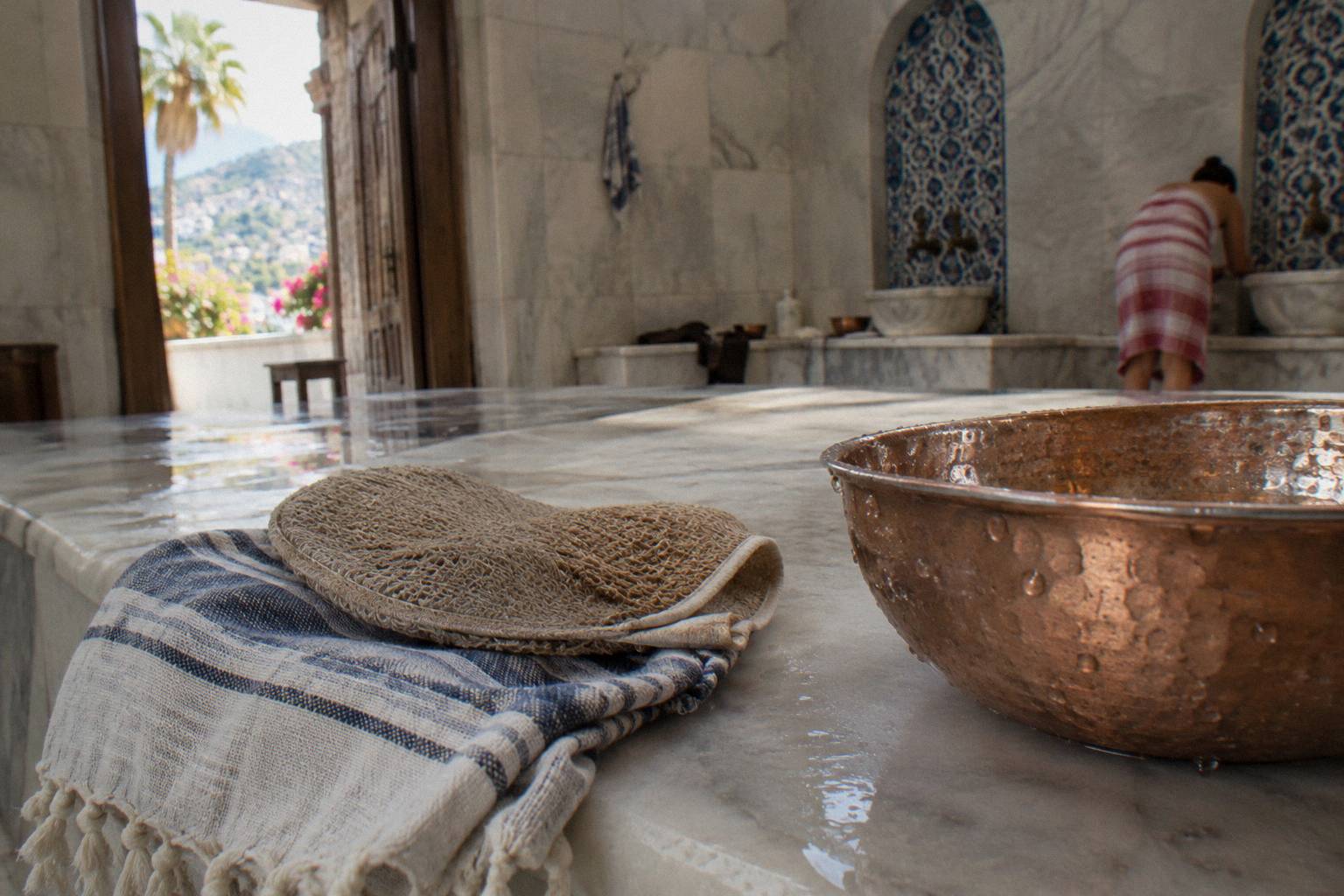
Four words cover almost everything an attendant or a booking page will say: peştemal, the thin cotton wrap you wear inside; kese, the scrubbing mitt; tas, the copper bowl for pouring warm water; and göbek taşı, the heated marble slab at the centre of the hot room. Knowing them turns an inclusions list from jargon into a description of your afternoon.
| Term | What it is | Where it shows up on the packages |
|---|---|---|
| Peştemal | A handwoven cotton wrap, light yet absorbent, traditionally patterned, worn inside the bath | Listed on the Vakare packages (Private Bath, Side, Belek lines) as "peştemal and towel" |
| Kese | The scrubbing mitt used for full-body exfoliation | Appears as "peeling", "kese", "body scrub" or "scrub massage" on nearly every line |
| Tas | A copper bowl used to pour warm water over the body | Not itemised on packages; part of the washing stage the foam massage represents |
| Göbek Taşı | The traditional heated marble slab in the centre of the hot room | Referenced directly by one Side package ("foam massage on marble stone"); otherwise folded into "Turkish bath" |
The peştemal deserves a sentence more because it answers the most common first-timer worry, what to actually wear. Per the official portal, on arrival the assistant hands over tokens or wristbands, a kese, a peştemal and often disposable underwear; you change in a locker room and wrap the peştemal around yourself, and slippers are provided or you can bring your own (the portal's arrival description). The full clothing question, including the separate sections issue, is treated in the blog post on whether Turkish baths are clothing optional and in the guide to what to wear to a Turkish bath.
What Happens On Arrival At A Hammam?
You check in, receive a locker key or wristband along with the peştemal, kese and slippers, change, and are shown into the warm area to sweat before the attendant begins the scrub. Raised seating in the heat lets you rest between stages, and the whole arc from arrival to oil massage is what the package duration, whether 1 hour or 3, is measuring. On an excursion package, the hotel pickup simply extends the arc at the front end.
The heat stage is not a formality. It is what softens the skin for the kese, which is why every package that includes peeling also includes a sauna or steam room: the two only work together. A package with foam massage but no listed peeling, or the reverse, would be a broken ritual, and the package list here contains no such line. The scrub itself is brisk and thorough, the foam wash that follows is the reward, and the oil massage is the wind-down. First-timers who want the minute-by-minute version should read what happens in a Turkish bath, step by step.
Timing expectations are worth setting here too. The durations on the lines, 1 hour at the short end and 3 hours at the long end, cover the in-venue session. Pickup adds travel that depends on where your hotel sits, and the resort hubs break down like this:
| Hub | Approximate road distance from Antalya Airport | Packages listed for the hub | Typical session lengths |
|---|---|---|---|
| Lara and Kaleiçi | About 15-17 km to Lara, about 13-17 km to Kaleiçi | Kaleiçi 1-hour bath, Lara Hamamı sessions, the ladies-only bath | 1 hour to 2 hours 30 minutes |
| Belek and Kadriye | About 34-35 km to Belek, about 30 km to Kadriye | Belek packages with and without transfer, the clay-mask line | 1 hour to 2 hours 30 minutes |
| Side, Manavgat, Çolaklı, Kumköy | About 65-67 km to Side, about 56 km to Çolaklı, about 62 km to Kumköy | The Side packages with hotel pickup, the VIP option | 1 hour 30 minutes to 2 hours 30 minutes |
| Kemer, Beldibi, Çamyuva, Tekirova | About 55-62 km to Kemer, about 45-46 km to Beldibi, about 70-76 km to Tekirova | The two Kemer packages and the foam-and-oil line | 1 hour 30 minutes to 3 hours |
| Alanya | About 125-128 km | The Alanya packages with hotel pickup | 1 hour 30 minutes to 2 hours 35 minutes |
Those distances are context for the pickup question, never a promise of a drive time. How long to linger once inside is a separate question, handled in the post on how long you should stay in a Turkish bath.
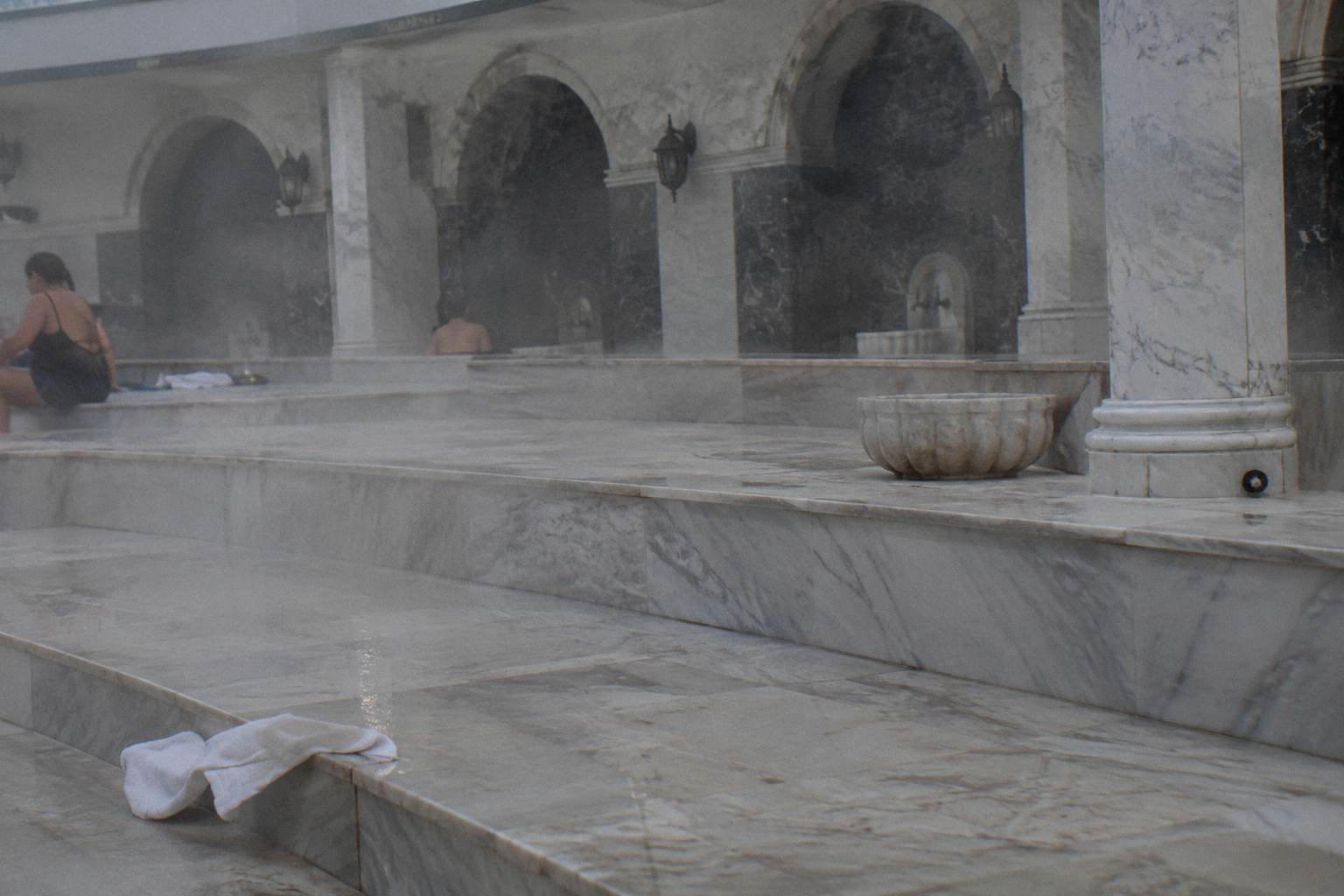
The Lara venue run by Lara Hamamı shows the arrival arc in its plainest modern form. "Sauna Scrub Steam, 1 Hour 15" lists coffee or tea among its inclusions and describes sauna, steam room, scrub, foam massage and a 20-minute oil massage in its description, from €25 per person, minimum age 5, with free cancellation up to 24 hours before the start. Its review pool is small, so the description rather than a rating is the basis for judging it. The full Sauna Scrub Steam session in Lara suits a reader staying in Lara or Kundu who wants the complete sequence without a long transfer. Check availability for a date.
What About Gender Separation And Tipping?
Traditional hammams separate men and women by rooms or by hours, with same-gender attendants, and that remains the general custom in Turkey, though each venue's own wording governs what you will actually find. Tipping is customary but optional, in cash, handed to the attendants at the end. Neither point is covered by the official portal, so both are stated here as custom rather than rule, and the specific packages are the authority for their own venues.
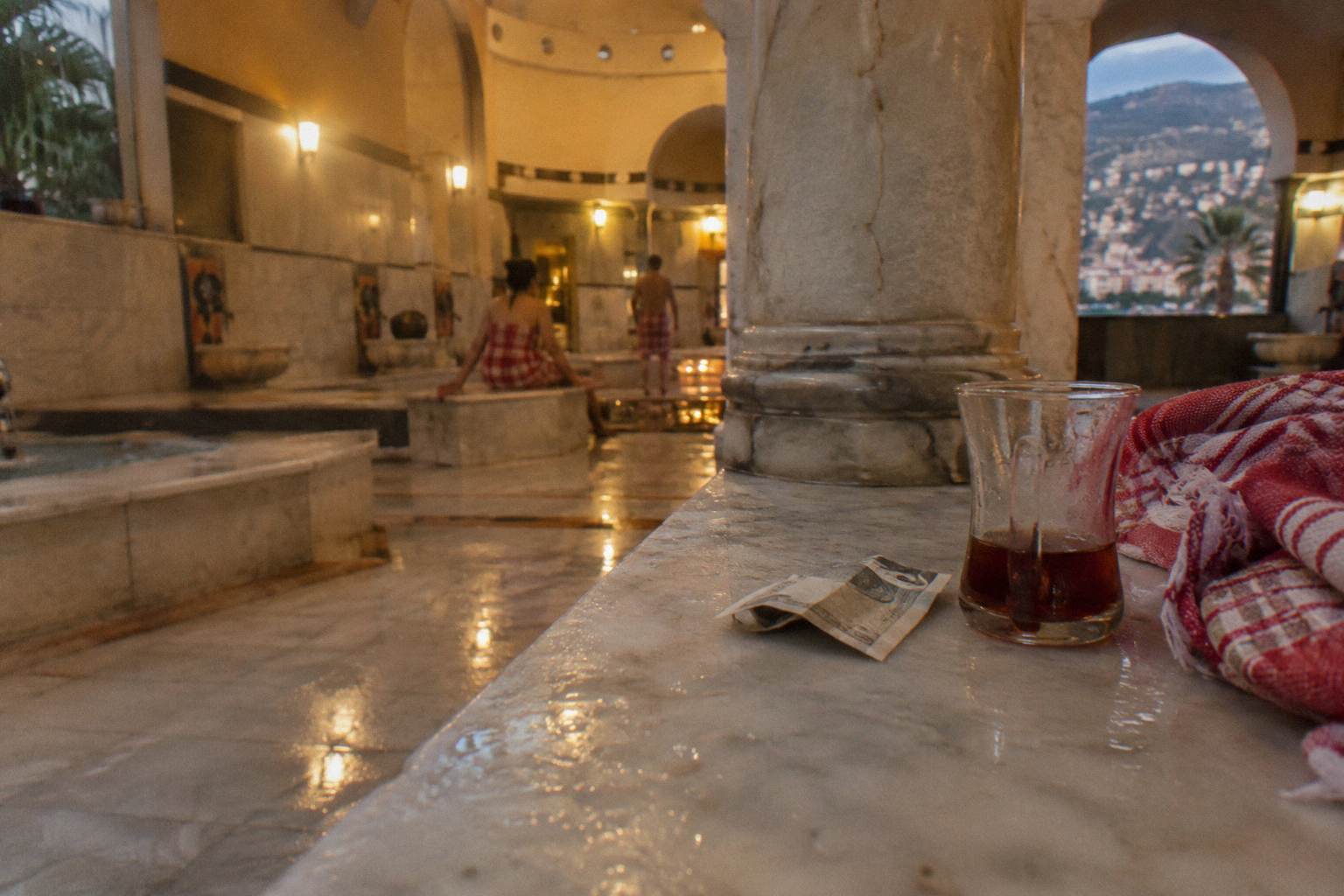
The custom matters because the package lines differ sharply on it. Two packages make a women-related claim of any kind: the Book From Locals "Halal Bath, Oil Massage, 2 Hours" in Lara, whose operator wording describes separated rooms for ladies and gentlemen, from €18 per person, rated 4.4 from 122 reviews; and the "Ladies Only Bath At Lara Hamami", exclusively for women with female staff only, which is not a private session and for which the price is shown on the booking page. Every other package says nothing on the subject, and nothing should be assumed for them. The line-by-line picture is gathered in the guide to Turkish baths for women with separate sections and female staff.
On extras: several packages list optional add-ons, a face mask here, a longer massage there, Doctor Fish on the Side VIP option, and one blog post covers the realistic pressure question in full, whether you will be pressured to buy extras in an Antalya hammam. The practical summary is that optional means optional, and the base sequence stands on its own without any of them.
Where Do The Historic Kaleiçi Baths Fit In?
Kaleiçi holds two working historic baths that show the original architecture the packages are imitating: Sefa Hamamı, a reservation-only Ottoman hamam whose own site claims 600 years, and Balık Pazarı Hamamı, a 13th-century Seljuk bath that still serves as a hamam today. Neither is bookable through the packages here; they are the architectural reference point, not a competitor. Seeing either, even from the cool room, explains what the modern venues are compressing.
Sefa Hamamı's own-site history is unusually specific: the Makbul Ağa Mosque Foundation's income declaration records a restoration in 1450, and the Ottoman city archives list it as "Makbul Ağa Turkish Bath", with 13th-century Seljuk features and Roman elements in its infrastructure. Its format is reservation-only and private during your slot, maximum two guests, couples treated one after another, with all treatments by a male therapist; it is not a separate-sections bath. Its two programs, a 60-minute Traditional Hamam and a 90-minute Full Hamam Experience with a 30-minute oil massage, mirror the stage structure exactly.
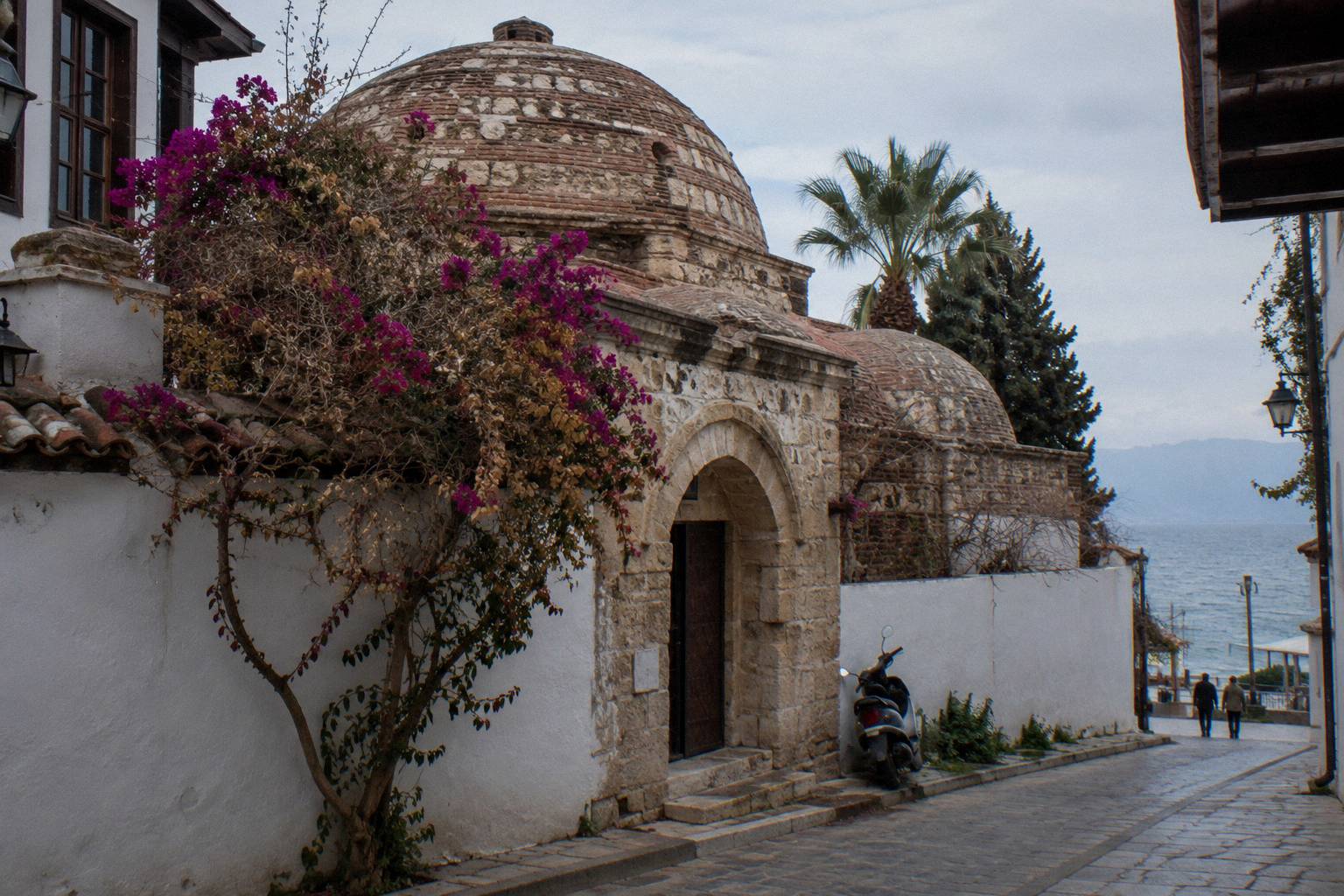
Balık Pazarı Hamamı, also called Çukur Hamam, is older: an Anatolian Seljuk bath of the 13th century in the Tuzcular quarter of Muratpaşa, with a pointed-barrel-vaulted cool room, a hot room under a central dome flanked by two iwans, and two private halvet rooms. It was restored in the early 2000s, when the ruined changing room was repaired and a women's section added, and the heritage inventory records that the building continues to serve as a hamam today.
Kaleiçi itself rewards the walk between the two. The name means "Inner Castle": the walled historic centre on the Mediterranean, part of ancient Attaleia, founded in the 2nd century BCE by Attalus II, with Roman, Byzantine, Seljuk and Ottoman layers stacked visibly in the fabric. Hadrian's Gate, the three-arched marble monument built in 130 AD and rediscovered in 1882 when the wall remains were cleared, stands at its edge. A morning session at a modern venue plus an afternoon stroll here is the realistic way to get both the ritual and the architecture out of one day.
Health Cautions Before You Book
The heat stages that make the ritual work also define who should check with a doctor first: anyone who is pregnant, over 65 or under 16, has heart disease or high or low blood pressure, takes medication, or has recently drunk alcohol. Nothing here is a medical claim in either direction; the cautions below are the sourced ones and nothing more. Every package's heat exposure sits in the sauna and steam room stages, so the cautions apply to all of them equally.
The Cleveland Clinic's guidance on saunas is the clearest single source: check with a healthcare provider before using a sauna if you are older than 65, under 16, pregnant or trying to get pregnant, have heart disease, heart failure or high or low blood pressure, certain neurologic conditions such as epilepsy, take medication, or are concerned about male infertility; and do not use a sauna after drinking alcohol or after a recent heart attack or stroke (Cleveland Clinic's sauna guidance). Harvard Health adds nuance for older readers: saunas and hot baths appear manageable for people with stable heart disease and mild heart failure, while unstable chest pain or poorly controlled blood pressure rules them out, and people in their 70s and older with low blood pressure should be extra careful (Harvard Health on hot baths and saunas).
Two practical habits come with that guidance: drink two to four glasses of cool water after the sauna stage, and keep the session alcohol-free from start to finish. The pregnancy-specific wording, and how the minimum ages printed on the packages (4, 5, 7 and 12 depending on the line) interact with the under-16 caution, are gathered in the dedicated guide on Turkish bath sessions in pregnancy and health cautions. Family planning with children is covered in the companion write-up on Turkish baths with kids.
For most healthy adults the session is simply warm, wet and relaxing, and the cautions above are the boundary conditions rather than the headline. The packages themselves take different positions on children: minimum age 4 on the Tourmania and Sommer lines, 5 on the Lara Hamamı and HARLEY lines, 7 on the tourbookinturkey and Orient lines, and 12 on the TripVentura Alanya package. Where a line prints no age, ask the operator before booking for a child.
The same "ask first" logic applies to timing and season. Antalya's July and August means run to 34.2 and 34.1 degrees, so a hot-room session lands differently in high summer than in a January sitting between 6.1 and 15.0 degrees. Whether the whole thing earns its place in the holiday at all is asked straight in the write-up on whether a Turkish bath is worth it on holiday.
The stage vocabulary from earlier sections is the tool for that decision. A reader who wants the scrub-and-foam core with pickup and a salt room has the Side Sommer Tour line from €18.90 per person, rated 4.5 from 99 reviews. A reader who wants the oil finish too has the Vakare Side line from €25 per person. A reader who wants the full hour of massage and a private format has the Vakare private bath from €99, basis shown at checkout. Same ritual, three depths, and the choice is about appetite rather than quality.
The Alanya end of the package list shows the vocabulary surviving a long transfer: the Tourmania Alanya bath lists hotel pickup and drop-off, oil massage, foam massage, sauna and steam room, from €22.50 per person, rated 4.5 from 26 reviews, minimum age 4, over 1 hour 30 minutes. The "Orient Luxury Spa" name in Alanya carries a rating of 4.7 from 130 reviews at from €45 per person, though its itemised inclusion is only a champagne and fruit service, so ask the operator what the session itself contains before booking it on the rating alone.
Common Questions About Turkish Bath Rituals
What Is A Turkish Bath, Exactly?
A warm-room ritual in a fixed order: sweating in a sauna or steam room, a kese scrub, a foam wash, and usually an oil massage. It descends from Roman bathing through the Ottoman hammam, and bookable Antalya packages run the same sequence in modern venues in 1 to 3 hours.
What Is A Peştemal?
A thin, handwoven cotton wrap, light yet absorbent and traditionally patterned, that you wear inside the bath. Several packages, including the Vakare lines, list a peştemal and towel among their inclusions.
What Is A Kese?
The scrubbing mitt used for full-body exfoliation before the foam wash. On package lines it appears as "peeling", "kese", "body scrub" or "scrub massage", and it appears on nearly every package here.
What Is The Göbek Taşı?
The heated marble slab at the centre of a traditional hot room, where the scrub and foam wash take place. One Side package references it directly with "foam massage on marble stone"; elsewhere the stage is folded into the words "Turkish bath".
Do All Antalya Hammam Packages Include An Oil Massage?
No. Most list a 20-minute oil massage, and the private formats stretch it to a full hour, but a few lines, such as the Sommer Tour Side session, list scrub and foam without oil. The stage mapping table above shows which wording to look for.
Are The Historic Kaleiçi Baths Bookable As Packages?
No. Sefa Hamamı and Balık Pazarı Hamamı are editorial mentions only: they show the original architecture, but the bookable sessions here all run in modern venues. The packages are the way to buy the ritual; the old baths are the reason it exists.